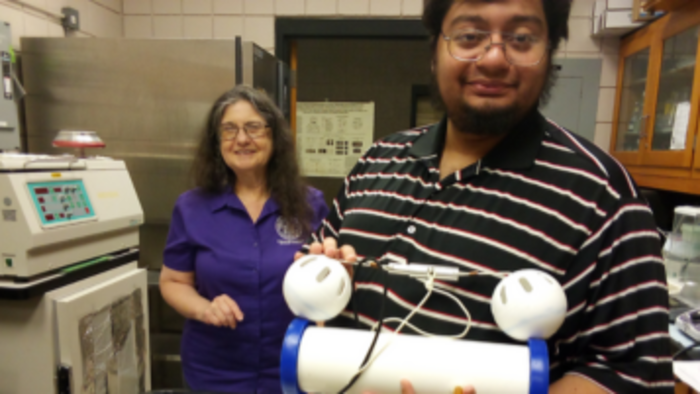
MAYA FROM ALCORN UNIVERSITY HONORED WITH TRAVEL AWARD AT NATIONAL BIOMEDICAL RESEARCH SYMPOSIUM (720 hits)
Ismael Maya, a graduating senior in biology, garnered recognition by winning a travel award at the 9th National IDeA Symposium of Biomedical Research Excellence held in Washington, D.C. from June 16-19. His research presentation, titled “The Baker’s Yeast (Saccharomyces cerevisiae) as a Model Organism to Elucidate the Causes of Metabolic Reprogramming in Glycolytic Tumors,” stood out among participants from various educational and research institutions nationwide.
The symposium, sponsored by the National Institutes of Health (NIH) through its IDeA Networks of Biomedical Research Excellence (INBRE) program, plays a pivotal role in enhancing biomedical research capabilities across different states. It supports faculty research, mentors students, and enhances research infrastructure, aiming to foster scientific excellence and train biomedical scientists.
Under the guidance of Dr. Jon Ignacio Moreno, Associate Professor of Biology, and Dr. Marta Piva, Interim Chair and Professor of Biology, Ismael conducted research focusing on the role of mitochondrial DNA in metabolic shifts observed in glycolytic tumor cells. Utilizing baker’s yeast as a model organism, the study explores how these cells transition from oxidative to anaerobic energy production, mirroring metabolic changes seen in cancer cells.
Dr. Piva highlighted the significance of their research, stating, “Mitochondria are the powerhouses of the cell; they have their own DNA. Our project aims to elucidate the role mitochondrial DNA plays in switching from a cell metabolism that uses oxygen to produce energy (normal cells) to one that does not (glycolytic tumor cells). We use the baker’s yeast as the model organism because it can produce energy with or without oxygen, mimicking tumor cells.”
The National Association of IDeA Principal Investigators (NAIPI) awarded travel grants based on the scientific abstracts presented at the symposium, recognizing outstanding contributions to biomedical research. With over 1,000 attendees, including undergraduate and graduate students, postdoctoral fellows, faculty, and staff, the event featured high-level scientific presentations across disciplines, plenary and keynote talks, and poster sessions showcasing research by IDeA scientists.
The symposium also included forums and workshops aimed at providing participants with new scientific insights and career development opportunities. It served as a platform for networking and collaboration among researchers committed to advancing biomedical knowledge and addressing critical health challenges. Ismael Maya’s achievement not only highlights his dedication and research prowess but also underscores the impact of programs like INBRE in fostering the next generation of biomedical researchers.